THE 7TH INTERNATIONAL
SYMPOSIUM ON THERMAL-FLUID DYNAMICS
(ISTFD 2026)
10-13 July 2026, Xi'an, China

THE 7TH INTERNATIONAL
SYMPOSIUM ON THERMAL-FLUID DYNAMICS
(ISTFD 2026)
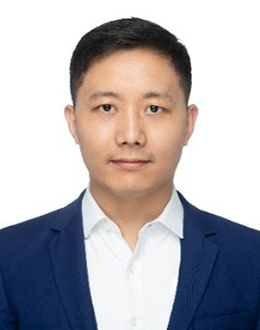
Prof. Haohua Zong
National Key Laboratory of Aerospace Power System and Plasma Technology, China
E-mail: Haohua_Zong@163.com
Bio
Dr. Haohua Zong, born in October 1992, is an Associate Professor at the National Key Laboratory of Aerospace Power System and Plasma Technology. He received his Ph.D. from Delft University of Technology (the Netherlands) and conducted his postdoctoral research at the Swiss Federal Institute of Technology Lausanne (EPFL). His primary research interests include plasma flow control and intelligent control. He has published over 80 SCI-indexed papers in top fluid mechanics and aerospace journals such as Journal of Fluid Mechanics, Energy, Aerospace Science and Technology, and Physics of Fluids. His Google Scholar citations exceed 2,000. He holds nearly 30 authorized invention patents and has published three Chinese monographs. He has received one first prize and one second prize of provincial/ministerial-level Science and Technology Progress Awards, and has been recognized as a top 2% world-class scientist in the aerospace field. He serves as a committee member of several academic societies, and is in charge of several research projects, including Key Programs, Excellent Young Scientists Fund, Special Programs, and General Programs of the National Natural Science Foundation of China.
Title
Intelligent plasma flow control powered by deep reinforcement learning
Abstract
Plasma Flow Control (PFC) is a cutting-edge frontier in aerospace, with broad application prospects in lift enhancement, drag reduction, noise suppression, and thermal load mitigation for aircraft. Over the past two decades, the development of PFC has relied primarily on actuator innovation and the understanding of control mechanisms, yet at the control level it is still operated in open-loop fashion with parameters tuned manually by human experience. Under this background, moving towards closed-loop control and integration of PFC with artificial intelligence becomes inevitable and imperative. The synergistic combination of deep reinforcement learning and fast-response plasma actuation brings new opportunities for flow control, but also poses severe challenges such as "real-time feedback," "sparse sensing," and "delayed rewards." Through several years’ exploration, our team has proposed an FPGA-based heterogeneous deep reinforcement learning control framework, capable of achieving intelligent closed-loop control at a frequency as high as 10 kHz, meeting the demands of adaptive regulation for high-speed, high-Reynolds-number extreme flow conditions. Built upon this framework, we conducted the world's first supersonic closed-loop flow control experiment, reducing the experimental testing time for typical flow control studies from O(h) to O(min), and achieving lift enhancement, drag reduction, and noise suppression effects far superior to those of open-loop control.